You Won’t Believe the Street Art Hiding in Amman
Amman isn’t just about ancient ruins and hummus—it’s alive with color, stories, and creativity most travelers completely miss. I wandered into a neighborhood thinking I’d just grab coffee, and ended up face-to-face with massive murals that stopped me in my tracks. This city pulses with underground art and cultural soul, from graffiti that speaks truth to power to galleries preserving Jordanian identity. If you’re into real, raw culture, Amman’s artistic heartbeat is waiting—just off the tourist trail.
Beyond Petra: Amman’s Hidden Cultural Pulse
When most people think of Jordan, their minds leap to the rose-red city of Petra or the desert grandeur of Wadi Rum. These wonders are rightly celebrated, but they often overshadow the vibrant, contemporary spirit of the capital itself—Amman. Far from being a mere transit point, Amman is a city where history and modernity coexist in dynamic tension, especially within its thriving arts scene. While tourists queue at ancient sites, a quieter revolution unfolds on its streets: one painted in bold colors, layered with meaning, and driven by voices eager to be heard.
The city’s artistic energy isn’t confined to museums or galleries; it spills onto sidewalks, climbs up building facades, and animates forgotten corners. In neighborhoods like Jabal Al-Weibdeh and Rainbow Street, creativity isn’t an afterthought—it’s part of daily life. Here, the Roman Theater stands just minutes from alleys covered in politically charged murals. This juxtaposition isn’t accidental; it reflects a national identity in flux, where respect for tradition walks hand-in-hand with a desire for expression and change.
What makes Amman’s cultural pulse unique is its authenticity. Unlike curated tourist experiences, this art emerges organically from local concerns—identity, youth aspirations, social justice, and national pride. Artists use spray paint, stencils, and reclaimed materials to communicate ideas that might not find space in mainstream media. The result is a living canvas, constantly evolving, shaped by the rhythms of urban life and the urgency of self-expression. For visitors willing to look beyond the guidebooks, Amman offers a rare opportunity: to witness culture as it happens, not as it’s preserved.
Jabal Al-Weibdeh: Where Bohemia Meets the Everyday
Nestled on a hillside dotted with olive trees and old stone houses, Jabal Al-Weibdeh is the heart of Amman’s alternative art world. This isn’t a gentrified district polished for Instagram—it’s a neighborhood where artists live, work, and gather in unpretentious spaces that feel more like homes than institutions. The streets slope gently, lined with fig trees and graffiti-covered walls, where every turn reveals another surprise: a hidden gallery, a poetry reading in a courtyard, or a mural depicting a grandmother’s face woven with Arabic calligraphy.
At the center of this creative ecosystem is Dar Al-Anda, one of the city’s most respected independent galleries. Housed in a restored 1930s villa, it showcases contemporary Jordanian and regional artists, often focusing on themes of memory, displacement, and cultural continuity. Exhibitions here are thoughtful and accessible, designed to invite dialogue rather than awe. Nearby, smaller studios operate out of converted apartments, where emerging painters and sculptors experiment with mixed media, textiles, and digital art. These spaces often open their doors during monthly art walks, when locals and curious visitors wander from one pop-up show to the next, sipping mint tea and discussing ideas late into the evening.
But the art in Jabal Al-Weibdeh isn’t limited to formal exhibitions. It leaks into everyday life. Bookshops double as performance venues, hosting open mic nights where poets recite verses in Arabic and English. Cafés with mismatched furniture and vinyl records on the walls serve as informal meeting points for creatives. A bench might be covered in mosaic tiles spelling out a line from Mahmoud Darwish; a shuttered storefront could become a temporary canvas for a political statement. There’s a sense that anything can be art here—and that everyone has a role in shaping the culture.
For the 30- to 55-year-old woman traveling with curiosity and an appreciation for meaningful experiences, Jabal Al-Weibdeh offers something deeply resonant: a community where creativity is woven into the fabric of life. It’s not about perfection or polish; it’s about presence, connection, and the courage to express oneself. Walking these streets, you don’t feel like a spectator—you feel invited in.
Rainbow Street: More Than Just a Instagram Backdrop
Rainbow Street is often dismissed as too touristy, too commercial, too crowded. And yes, on weekends, it fills with visitors sipping lattes and snapping photos in front of its famously colorful buildings. But to write it off would be a mistake. Beneath the surface of its café-lined sidewalks and boutique shops lies a deeper cultural current—one that rewards those who visit with intention and timing.
The best way to experience Rainbow Street is to come early in the morning, when the sun casts long shadows and the air carries the scent of fresh bread from nearby bakeries. At this hour, the street belongs to locals: mothers walking children to school, shopkeepers arranging displays, and artists quietly touching up a mural before the crowds arrive. It’s then that the art truly comes alive—not as a backdrop, but as a living part of the neighborhood.
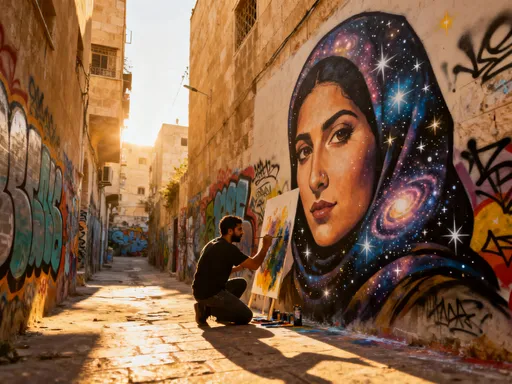
Look closely, and you’ll notice details that most miss. A wooden door painted with geometric patterns inspired by Islamic design. A mosaic bench embedded with fragments of ceramic tiles, each piece telling a story of home and heritage. One particularly striking mural depicts a Bedouin woman with stars in her eyes and constellations woven into her headscarf, a poetic fusion of tradition and imagination. These works aren’t random decorations; they’re visual narratives created by artists who see beauty in Jordan’s roots and possibilities in its future.
Rainbow Street also hosts a thriving community of local designers and artisans. Small boutiques sell handmade jewelry crafted from olive wood and mother-of-pearl, while textile artists display embroidered thobes—a nod to Jordan’s rich craft traditions. Street performers often blend traditional music with modern rhythms, playing the oud alongside electronic beats in a celebration of cultural fusion. These moments of harmony reflect a broader truth about Amman: that modernity doesn’t erase tradition—it reinterprets it.
For the thoughtful traveler, Rainbow Street offers more than photo ops. It offers insight. By visiting with awareness—by sitting in a quiet café, chatting with a vendor, or returning at dusk when the lights come on and the city softens—visitors can move beyond the surface and connect with the soul of the place. It’s a reminder that even in the most visible spaces, authenticity can thrive—if you know where to look.
Public Art with Purpose: Murals That Speak Volumes
Street art in Amman is not merely decorative. In many neighborhoods, especially in the eastern and working-class districts like Marka and Al Hussein, murals serve a deeper function: they give voice to communities often overlooked. These are not commissioned works designed to beautify urban spaces; they are grassroots projects born from collaboration between artists, youth groups, and local organizations. The messages they carry are direct, emotional, and often urgent.
One of the most impactful initiatives is the Wall of Hope project, which began as a response to rising youth unemployment and social isolation. Partnering with local schools and community centers, artists work with teenagers to design and paint large-scale murals on public walls. The themes vary—some focus on dreams and aspirations, others on environmental awareness or gender equality. What unites them is a commitment to dialogue. Each mural is accompanied by workshops where young people discuss the issues behind the imagery, learning not only artistic skills but also how to articulate their experiences.
In one neighborhood, a mural shows a child holding a book that transforms into a flock of birds, symbolizing education as liberation. In another, a woman in traditional dress stands beside a young girl in modern clothes, their hands joined across generations. These images do more than decorate—they affirm identity, inspire pride, and create a sense of ownership over public space. For residents, seeing their stories reflected on the walls fosters belonging. For visitors, these works offer a rare window into the lived realities of Jordanian life beyond headlines and stereotypes.
What’s remarkable is how these murals resist vandalism. In a city where graffiti is often associated with rebellion or territorial marking, purpose-driven art is treated with respect. People understand that these paintings represent collective hopes, not individual acts of defiance. They are protected not by security cameras but by community pride. This speaks volumes about the role art can play in building social cohesion—especially in cities navigating rapid change and economic pressure.
For women traveling with empathy and a desire to understand, these murals offer profound emotional resonance. They reflect the strength, resilience, and quiet determination of families and communities striving for a better future. To stand before one and listen to its story is to engage in a silent conversation across cultures—one that deepens understanding and fosters connection.
Supporting Local: Galleries and Artist Collectives Worth Your Time
While street art captures the raw energy of Amman’s creative scene, its galleries and artist collectives provide the foundation for sustained cultural growth. These institutions do more than display artwork—they preserve heritage, nurture talent, and create spaces for critical conversation. Visiting them is one of the most meaningful ways to support Jordan’s artistic community while gaining deeper insight into its values and visions.
The Jordan National Gallery of Fine Arts, located in the Jabal Amman area, is a cornerstone of the country’s cultural landscape. With a collection spanning over 2,000 works, it traces the evolution of modern and contemporary art across the Arab world. Paintings, sculptures, and installations reflect regional histories, spiritual themes, and personal narratives. What sets this gallery apart is its educational mission: guided tours, artist talks, and school programs ensure that art remains accessible to all, not just the elite. For visitors, a few hours here can transform a casual interest into genuine appreciation.
Equally significant is Darat al Funun, a nonprofit arts center housed in a cluster of restored early 20th-century villas. Founded in 1993, it has become a hub for Arab artists, writers, and scholars. Its exhibitions often tackle complex themes—memory, exile, identity—through innovative installations and multimedia works. Beyond exhibitions, Darat al Funun offers residencies for emerging artists, publishes catalogs and research, and hosts public lectures. It’s a place where art and intellect meet, where creativity is both celebrated and scrutinized.
Smaller collectives also play a vital role. Groups like the Amman Artists Network and the Jordanian Artists’ Association organize pop-up shows, collaborative projects, and fundraising events to help artists sustain their practice. Many operate with limited resources but boundless passion, relying on volunteer efforts and community support. When travelers visit these spaces, purchase artwork, or attend events, they contribute directly to this ecosystem. A simple act—buying a hand-painted ceramic bowl or donating to a youth art program—can make a tangible difference.
For the woman who values authenticity and impact, engaging with these institutions goes beyond tourism. It becomes an act of solidarity—a way to honor the labor, vision, and courage behind every brushstroke. In a world where mass-produced souvenirs dominate, choosing to support local art is a quiet but powerful statement of respect.
How to Experience Amman’s Art Scene Like a Local
To truly connect with Amman’s artistic soul, you must step off the beaten path. Forget rigid itineraries and hop-on-hop-off buses. Instead, embrace slowness, curiosity, and human connection. The city reveals its best secrets not through brochures, but through conversation, chance encounters, and the willingness to wander without a map.
Start by renting a bicycle or walking. Amman’s hilly terrain rewards exploration on foot, where every ascent brings a new vista—perhaps a hidden garden, a graffiti-covered staircase, or a rooftop studio with an open door. Carry a small notebook to sketch or jot down impressions. Talk to people: the shopkeeper arranging scarves, the barista pouring Arabic coffee, the elderly man sitting on a bench. Ask simple questions—“Who painted that wall?” or “Where do artists gather?” More often than not, you’ll receive directions to a mural, an invitation to an event, or a story about the neighborhood’s history.
Time your visits wisely. Mornings are ideal for quiet reflection and photography, when light filters softly through narrow alleys. Evenings bring a different energy—galleries host opening receptions, cafés host poetry readings, and street performers emerge under string lights. Attending one of these events transforms you from observer to participant. You’re no longer just seeing art—you’re part of its audience, its community, its life.
When shopping, seek out weekend markets like the Souk Jara or the Amman Design Week pop-ups. These are not tourist traps; they are vibrant gatherings where designers, potters, weavers, and painters sell their work directly. Buying a hand-embroidered cushion, a ceramic vase, or an original print supports individual artists and keeps traditional crafts alive. Plus, these pieces carry stories—of the hands that made them, the materials used, and the ideas behind them.
Most importantly, travel with humility and openness. Amman’s art scene thrives because it is rooted in real life, not performance. It doesn’t exist to impress outsiders. By approaching it with respect and genuine interest, you honor its integrity. You may not understand every symbol or reference, but your presence—your attention—matters. In a world that often overlooks the quiet corners of culture, your curiosity becomes a form of care.
Why This Side of Amman Matters—And Who Should Seek It Out
Amman’s street art and creative communities matter because they represent something rare: culture in motion. They are not frozen in time like archaeological sites, nor are they commercialized for mass consumption. Instead, they pulse with the energy of people shaping their identity, questioning norms, and imagining better futures. For travelers who have grown weary of checklist tourism—who crave connection, meaning, and authenticity—this side of Amman offers a refreshing alternative.
It’s especially meaningful for women aged 30 to 55, many of whom travel not just to see the world, but to understand it. These travelers often seek experiences that resonate emotionally and intellectually. They appreciate craftsmanship, storytelling, and the quiet dignity of everyday life. In Amman’s art scene, they find all of this and more: a testament to resilience, a celebration of heritage, and a vision of hope.
By exploring these creative spaces, visitors do more than enjoy beautiful sights. They become allies in cultural preservation. Every gallery visited, every artwork purchased, every conversation shared strengthens the ecosystem that allows artists to thrive. In a region where creative expression can face challenges, this support is vital. It sends a message: your voice matters. Your story is worth telling.
Amman will never replace Petra as Jordan’s top attraction—and it shouldn’t. But for those willing to look deeper, the city offers a different kind of wonder. It’s found in a child’s laughter beside a mural, in the quiet focus of a painter on a rooftop, in the shared silence of someone moved by a poem written on a wall. This is not tourism as spectacle. It’s tourism as connection. And in a world that often feels disconnected, that may be the most valuable journey of all.